


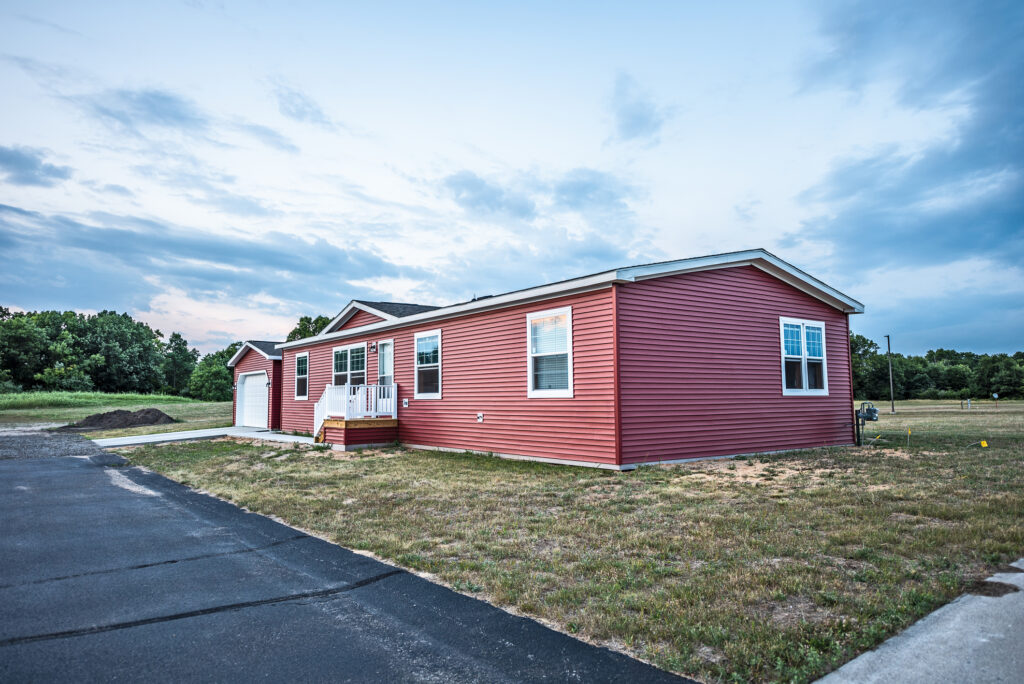
Ownership of a manufactured home starts with finding the right piece of land.
A manufactured home can be the more affordable path to owning property in Mobile County, and the process to ownership is generally more straightforward. You choose the lot and the home that fit your needs and budget, giving you more control over the overall purchase.
Not every vacant lot, however, is ready—or even eligible—for a manufactured home. Zoning, utilities, access, and other requirements can determine whether a property will work for your plans.
Here’s everything you need to know about buying land for a manufactured home in Mobile County, AL
TABLE OF CONTENTS
- KEEP YOUR HOME PLANS IN MIND WHEN SHOPPING FOR LAND
- CAN YOU PUT A MANUFACTURED HOME ON THE PROPERTY?
- LOOK AT THE GROUND, NOT JUST THE ASKING PRICE
- CHECK WATER, POWER, SEWER, AND SEPTIC
- THINK ABOUT FINANCING EARLY
- WHAT SHOULD YOU CHECK BEFORE CLOSING?
- FAQs ABOUT BUYING LAND FOR A MANUFACTURED HOME IN MOBILE COUNTY, AL
- FIND LAND THAT WORKS FOR YOUR MANUFACTURED HOME
KEEP YOUR HOME PLANS IN MIND WHEN SHOPPING FOR LAND
You don’t need to have a manufactured home picked out before you start looking at land. You should, however, have a general idea of what you want.
Are you considering a single-section home or something larger? How much outdoor space would you like? Do you eventually want a porch, garage, shed, or another structure? These details matter because the total size of a parcel doesn’t tell you how much of it is actually usable.
A two-acre property, for example, may sound like more than enough room. But part of that acreage could be heavily wooded, difficult to access, affected by an easement, or just not suitable for placing a home. Manufactured home buyers also need room for practical things such as the driveway, utilities, septic system (if one is needed), and the equipment used to deliver and install the home.
Read more: Top mistakes to avoid when buying land in Mobile, Alabama
CAN YOU PUT A MANUFACTURED HOME ON THE PROPERTY?

Before buying land, make sure that your manufactured home can actually be placed there.
One of the very first things to check before getting attached to a piece of land is whether a manufactured home is allowed there. You don’t want to buy a lot only to find out later that local rules or private restrictions limit what you can place on it.
Unincorporated areas of Mobile County don’t have conventional zoning. Because of this, buyers may have more flexibility, but that doesn’t mean every property is automatically suitable for a manufactured home.
Check the local rules and property restrictions. Find out first whether the property is actually in an unincorporated part of Mobile County. Some parcels fall inside a city or another municipal jurisdiction, which can mean different permit or development requirements. It’s best not to assume that the rules are the same just because two properties are a few miles apart.
Next, check for private restrictions. A subdivision, deed, or homeowners association may have rules that affect manufactured homes even when county zoning is not an issue. A listing that says “residential lot” or “homesite” doesn’t automatically mean your manufactured home will be allowed.
LOOK AT THE GROUND, NOT JUST THE ASKING PRICE
Before jumping on a low-priced lot for your Mobile County manufactured home, take a look at how much work the property needs. Manufactured home sites need to be prepared so water drains away from the home instead of collecting underneath it. If the property already has drainage problems, fixing them may become part of your site-preparation budget.
Here are some things to look for when you visit the property:
- Does water collect in low areas?
- Does the ground look soggy?
- Are there obvious drainage ditches or washouts?
- Is there enough level ground for the home?
Flood risk is another factor. Mobile County provides flood-zone and storm-surge maps that buyers can review when researching a parcel. While being in a flood zone doesn’t automatically make a property unusable, it may affect how the site needs to be prepared, your insurance costs, and other requirements. Sometimes a slightly more expensive parcel that already has a good homesite can make more sense than cheaper raw land that needs extensive work.
Read more: What Your Budget Can Get You in Land Around Mobile, Alabama ($30K to $300K+)
CHECK WATER, POWER, SEWER, AND SEPTIC
Utilities can have a big effect on the actual cost of your land. Don’t assume that because there are homes nearby, water and power will be easy to connect. Here’s what to check:
- Electricity: Find out whether electrical service already reaches the property or runs along the road. If power has to be extended a long distance, ask what that may involve before buying.
- Water: Ask whether public water is available to the parcel. If it is not, you may need to investigate whether a private well is feasible.
- Sewer or septic: Determine whether the property can connect to a public sewer system. If it cannot, you will most likely need an onsite septic system.
- Percolation test: If public sewer isn’t available, make sure the property’s soil is viable for an onsite septic system. A percolation test can help determine whether the soil can support the type of septic system the property will need.
THINK ABOUT FINANCING EARLY
Financing the land is another factor to consider. Depending on your situation and the property, your options may include cash, a traditional land loan, land-home financing, or owner financing.
Power Real Estate offers owner financing on qualifying properties, including some land in Mobile County. If a traditional land loan doesn’t work for you, ask whether an owner-financed lot might be a better fit for your plans.
WHAT SHOULD YOU CHECK BEFORE CLOSING?
By the time you’re ready to make an offer, you should have a much clearer picture of what it will take to turn the parcel into a homesite.
Before closing, check the following:
- Confirm that a manufactured home can go on the property.
- Find out which local authority handles the parcel.
- Review deed restrictions and subdivision rules.
- Confirm legal road access.
- Look for easements.
- Check available flood information.
- Verify water and electrical service.
- Find out whether you’ll need septic.
- Look at drainage and slope.
- Estimate clearing and grading work.
- Make sure the home can physically be delivered to the site.
- Get estimates for the biggest site-preparation costs.
- Find out which permits and approvals will be required.
You should also complete the normal due diligence that comes with purchasing land, including researching title and property boundaries. If you’re still learning how the land-buying process works, our How to Buy Land in Mobile County, Alabama: A Step-by-Step Guide covers the basics from start to finish.
FAQs ABOUT BUYING LAND FOR A MANUFACTURED HOME IN MOBILE COUNTY, AL
Do I need a survey before buying land for a manufactured home?
Not always, but a survey can confirm property lines, easements, access, and how much usable space you have before closing.
Will I pay property taxes on both the land and the manufactured home?
It depends on how the home is titled and classified. Check with the Mobile County Revenue Commission or your closing professional to see how the property will be assessed.
Can I put a used manufactured home on land I buy in Mobile County?Possibly. The home’s age, condition, local requirements, and any private restrictions can affect whether it’s allowed. If you already own a used manufactured home, confirm that it’ll be accepted on the property before you close on the land.
FIND LAND THAT WORKS FOR YOUR MANUFACTURED HOME
Buying land for a manufactured home gives you plenty of options in Mobile County. But the right property has to work on paper and on the ground.
Power Real Estate’s Accredited Land Consultants can help you compare properties and narrow down options that match your plans. Ready to start looking in Mobile County? Give us a call at 251.342.0600 or send us an email to see the available mobile home lots in Mobile County.